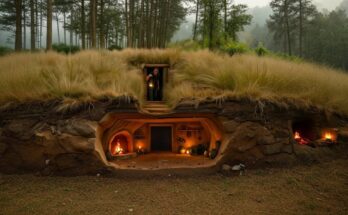
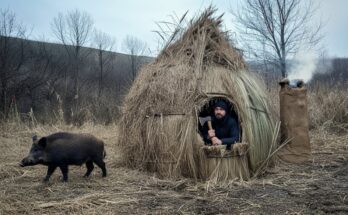
I ventured deep into the forest to construct a bushcraft shelter entirely from clay, starting with a flexible wooden frame from thin tree trunks woven like traditional fences. Layer by layer, I hand-applied thick clay to form curved, insulated walls that naturally blended into the landscape, creating a sturdy and organic structure from the ground up.
As the shelter took shape, I carefully installed a round window for light and visibility, then crafted a solid wooden plank door to seal the entrance securely against the elements. For the roof, I added a moss covering that provided excellent camouflage and extra warmth, while surrounding the base with stones and planted greenery for a polished, natural finish.
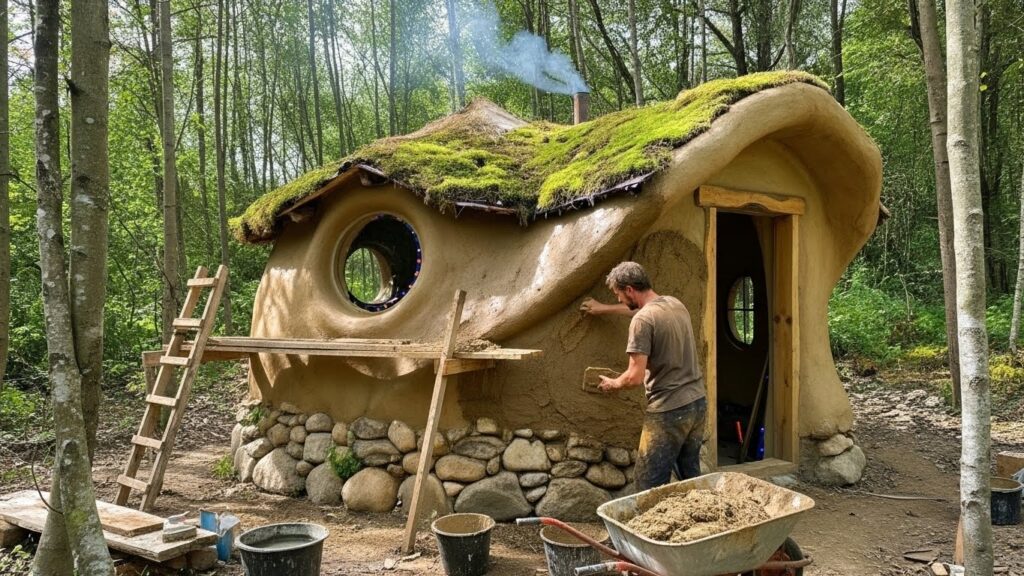
Inside, I built a compact wood stove as the centerpiece, positioning it to heat the space efficiently with smoke venting through a cleverly hidden chimney in the roof. The clay walls retained the warmth beautifully, transforming the raw interior into a cozy haven perfect for extended forest stays.
Every element relied on simple bushcraft techniques and foraged materials, from sourcing clay nearby to shaping it by hand without modern tools. The process tested my patience and skills, turning a simple clearing into a functional hideout that felt alive with the forest’s essence.
Completing this clay house filled me with pride—it’s a testament to self-reliance, offering shelter, warmth, and seclusion in the wild. Spending time inside by the stove, watching smoke curl skyward, I realized how such builds connect us deeply to nature’s rhythms.