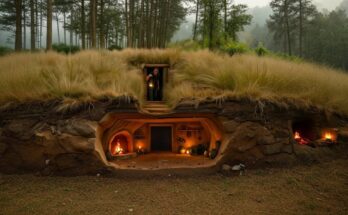
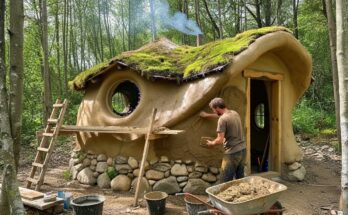
I ventured deep into the wild forest to construct a reed survival shelter, inspired by nature’s own designs like a boar’s bed, drawing from step-by-step bushcraft techniques for reliable wilderness protection. Spotting signs of wild boar activity—trampled grass and dug-out resting spots—guided my site selection, ensuring the build mimicked these natural hideouts for camouflage and warmth.
Harvesting fresh reeds nearby, I wove them into a sturdy, dome-shaped frame that arched gracefully over a shallow pit, layering bundles tightly to form waterproof walls capable of withstanding rain and wind during extended camping trips. The process demanded precision, bending and tying reeds with natural fibers to create an insulated cocoon perfect for solo survival in harsh conditions.
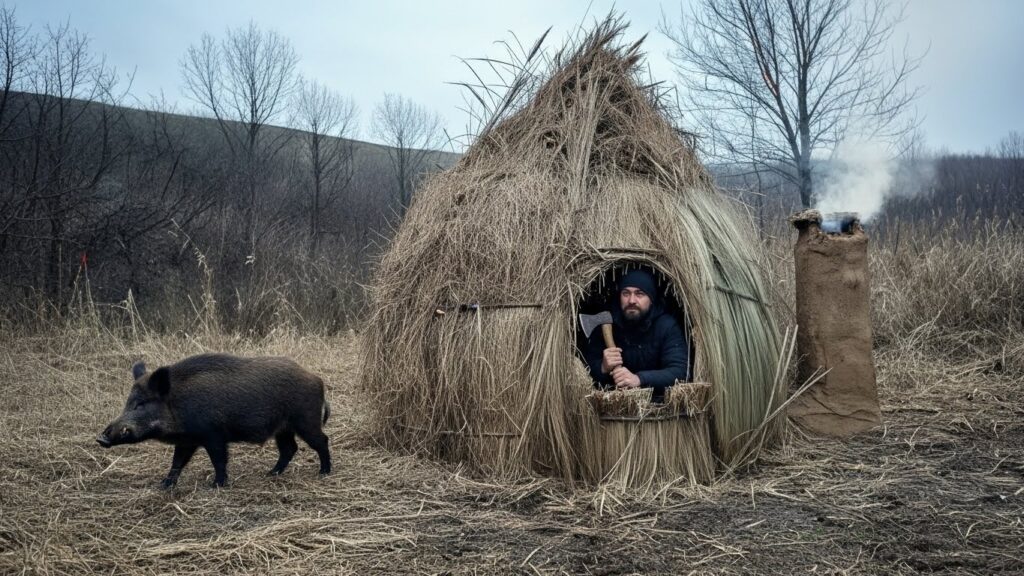
As the structure rose, I reinforced the entrance with denser reed mats and added a sloped roof extension to deflect moisture, transforming the simple frame into a spacious interior suitable for sleeping and storing gear. Observing boar’s bed details—like their preference for elevated, dry spots—helped me elevate the floor slightly with leaf litter for added comfort and pest resistance.
Testing the shelter’s warmth on the first night, I kindled a small fire just outside, its glow filtering through reed gaps to heat the enclosed space effectively against the chill. The build proved its mettle, staying dry and cozy, while sharing boar-tracking tips highlighted essential survival skills for navigating the wilderness safely.
This reed shelter adventure deepened my bushcraft knowledge, blending practical construction with wildlife insights for anyone exploring off-grid camping or forest survival. From reed gathering to final tweaks, it stands as a testament to using local materials for self-reliant, warm refuges in the wild.