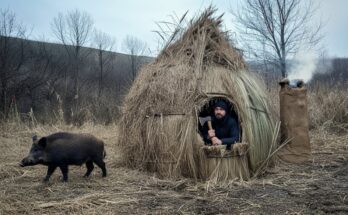
I spot a massive alder tree with enormous roots forming a natural hollow, perfect for a hidden dugout in this abandoned beaver hut area. I start by clearing out debris and mud from the root cavity, using my knife to carve out a stable entrance while ensuring the space stays concealed from view. The damp earth smells rich as I dig deeper, shaping a cozy chamber that feels like a secret fortress deep in the wilderness.

Next, I reinforce the walls with branches and pack mud around them to prevent collapse, creating a smooth, insulated interior. I haul in dry leaves and moss for bedding, layering them thick to trap warmth, and fashion a low bench from a split log for sitting. Smoke from my small fire pit starts to curl up as I test the draft, adjusting rocks to direct it safely outward without revealing my position.
Building the fire is key; I gather tinder and kindling from nearby, striking sparks until flames catch, filling the space with comforting heat that battles the chill. I brew tea over the coals and cook a simple meal, savoring the steam rising in the dim light filtering through the roots. The coziness surprises me—it’s warm, dry, and utterly hidden, like living inside the tree itself.
As night falls, I seal the entrance with a camouflaged weave of vines and bark, peeking out only to check for threats. Inside, the fire’s glow dances on the curved walls, and I settle into my bedroll, listening to the forest sounds muffled by earth. This dugout proves ideal for survival, blending seamlessly with nature for protection and rest.
Reflecting at dawn, I dismantle subtle traces, appreciating how the giant root provided such a warm, cozy base without much effort. The experience reinforces bushcraft essentials: location, insulation, and concealment make all the difference in harsh conditions. I leave empowered, ready for the next wild adventure